
- Introduction
- Understanding the Regulatory Landscape: More Than Just Paperwork
- Navigating the Maze: Overcoming Hurdles for International Market Entry
- The Strategic Advantage: Leveraging Regulatory Expertise for Expansion
- The Role of Specialized Services: Accelerating Your Global Journey
- Streamlining Market Access: The Power of Effective Regulatory Strategies
- Conclusion
Introduction
Getting your product into new countries can feel like deciphering a secret code. You’ve got a great idea, a solid product, and you’re ready to reach a wider audience, but then the regulations hit. This is where regulatory affairs steps in. Essentially, regulatory affairs is the bridge that connects your innovative product to the global marketplaces it needs to reach. It’s the expertise that understands the rules of different countries and helps you meet them so you can sell your product legally and safely worldwide. Without it, expansion can be incredibly difficult, if not impossible.
Understanding the Regulatory Landscape: More Than Just Paperwork
When we talk about regulatory affairs, it’s easy to think it’s just about filling out forms and ticking boxes. While that’s certainly a part of it, it’s much deeper than that. It’s about understanding the intricate web of laws, guidelines, and standards that governments set up to protect public health and safety. These regulations vary enormously from country to country, and even within different sectors like pharmaceuticals, medical devices, or food.
The Core Function: Ensuring Product Safety and Efficacy
At its heart, regulatory affairs is designed to ensure that products entering the market are safe for consumers and perform as intended. For pharmaceuticals, this means rigorous testing for efficacy and a clear understanding of potential side effects. For medical devices, it’s about making sure they function correctly and don’t pose a risk to patients or healthcare professionals. For diagnostic tests, it’s about their accuracy and reliability, which is critical for patient care. This core function is the foundation upon which all other market access relies.
Key Regulatory Bodies and Their Influence
Different regions have their own governing bodies. In the United States, the Food and Drug Administration (FDA) is a primary example. In Europe, it’s often the European Medicines Agency (EMA) for medicines and the European Commission concerning Medical Device Regulations (MDR) and In Vitro Diagnostic Regulations (IVDR). Japan has the Pharmaceuticals and Medical Devices Agency (PMDA), and so on. Understanding these bodies and their specific requirements is non-negotiable for international expansion. Each has its own submission processes, data requirements, and review timelines.
Harmonization Efforts and Their Limitations
There’s a push towards global harmonization of regulations, aiming to make it easier for companies to navigate different markets. Initiatives like the International Council for Harmonisation of Technical Requirements for Pharmaceuticals for Human Use (ICH) have made significant progress. However, even with these efforts, countries retain significant sovereignty in setting their own rules. What’s accepted in one region might not be in another, requiring a nuanced approach.
Navigating the Maze: Overcoming Hurdles for International Market Entry
Entering a new market with your product is akin to learning a new language and its customs. Each country has its own regulatory language, and getting it wrong can lead to delays, rejections, or even product recalls. This is where a proactive and informed approach to regulatory affairs becomes critical. It’s about anticipating challenges and building a strategy to overcome them.
Classification and Categorization of Products
The first hurdle is often understanding how your product will be classified in the target market. A medical device in one country might be considered a drug in another or fall under a different classification altogether. This classification dictates the regulatory pathway, the data required, and the overall approval process. Getting this wrong can send you down an entirely incorrect and time-consuming route.
Dossier Preparation: The Blueprint for Approval
The core of regulatory submission is the dossier, a comprehensive package of data demonstrating your product’s safety, quality, and efficacy. This isn’t just a collection of reports; it’s a meticulously crafted narrative that answers all the regulator’s potential questions. The format for these dossiers, like the Common Technical Document (CTD) for pharmaceuticals, is standardized to some extent, but country-specific requirements often remain.
Clinical Data Requirements and Local Trials
Many regulatory bodies require clinical data to support product claims. If your data was generated in a different region, you might need to conduct local clinical trials or provide additional data to satisfy the new market’s requirements. This can be a significant undertaking in terms of time and cost, so understanding these needs early on is essential.
Manufacturing and Quality Control Standards
Regulatory bodies look closely at your manufacturing processes and quality control systems. Compliance with Good Manufacturing Practices (GMP) is standard, but specific interpretations and inspections can vary. Demonstrating robust quality systems is crucial for gaining trust and approval.
The Strategic Advantage: Leveraging Regulatory Expertise for Expansion
It’s not just about knowing the rules; it’s about using that knowledge strategically. Embracing regulatory affairs as a strategic partner, rather than a mere compliance function, can dramatically accelerate and optimize global expansion efforts. This involves proactive engagement and foresight.
Early Engagement with Regulatory Authorities
Proactive engagement with regulatory authorities, where permissible, can be invaluable. This might involve pre-submission meetings to clarify requirements, discuss your development plans, or seek guidance on specific issues. Such interactions can prevent costly misunderstandings and streamline the approval process.
Developing a Global Regulatory Strategy
A successful global expansion isn’t a series of individual country submissions. It’s about developing a cohesive global regulatory strategy. This involves prioritizing markets, understanding commonalities in requirements, and planning submissions in a logical sequence. This can lead to efficiencies and faster overall market access.
Risk Assessment and Mitigation
Identifying potential regulatory roadblocks early allows for proactive risk mitigation. This might involve modifying product design, adapting manufacturing processes, or planning for specific data generation. A robust risk assessment approach saves time and resources in the long run.
Post-Market Surveillance and Compliance
Gaining market access is just the beginning. Regulatory affairs also plays a crucial role in ongoing compliance, including post-market surveillance, adverse event reporting, and lifecycle management of the product. Maintaining compliance ensures continued market access and builds long-term credibility.
The Role of Specialized Services: Accelerating Your Global Journey
| Specialized Services | Benefits |
|---|---|
| Global Market Research | Insights into international market trends |
| Localization Services | Adaptation of content for different regions |
| International Shipping | Efficient delivery to global customers |
| Customs and Compliance | Smooth navigation of international regulations |
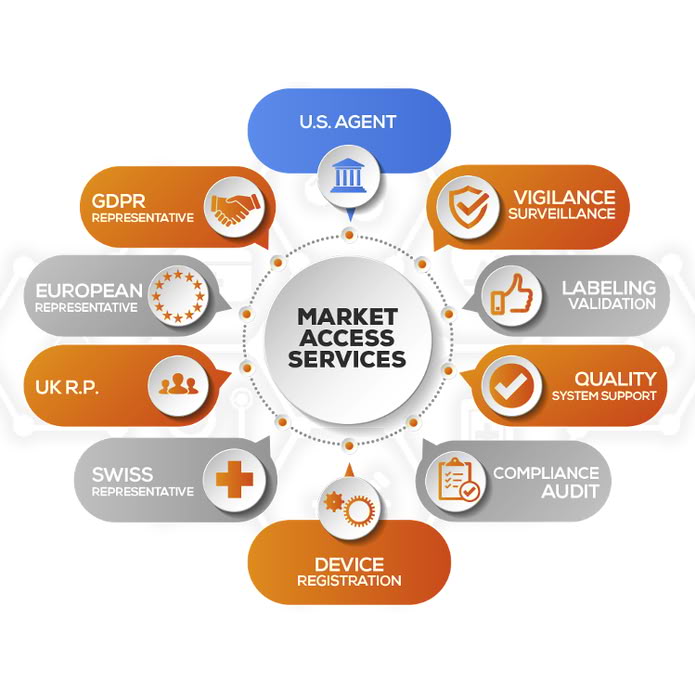
Embarking on global market access without specialized regulatory expertise can be daunting and error-prone. This is where dedicated regulatory affairs service providers come into their own, offering the specific knowledge and experience needed to navigate these complex environments effectively. For companies like Success Link, with over two decades dedicated to this field, the aim is to provide that essential support.
Expertise Across Diverse Product Categories
Navigating the regulatory landscape for pharmaceuticals is vastly different from that of medical devices or in-vitro diagnostics. Each sector has its own unique set of regulations, testing protocols, and submission requirements. Firms with a diverse team, like those focusing on these specific areas within Success Link, can offer tailored expertise for each product type. This avoids the need for a company to become an expert in every niche.
Tailored Solutions for Multinational Corporations
Multinational corporations often face a unique set of challenges, including managing multiple product portfolios, diverse market entry strategies, and the need for consistent global compliance. Specialized regulatory services can provide comprehensive solutions that address these complexities, from initial market strategy to ongoing lifecycle management, streamlining what would otherwise be a fragmented and overwhelming process.
Bridging Cultural and Linguistic Gaps
Beyond the technical regulations, there are often cultural nuances and linguistic barriers in international submissions. Specialized services can act as a cultural and linguistic bridge, ensuring that communication with regulatory authorities is clear, accurate, and culturally appropriate. This can prevent misinterpretations that might otherwise derail a submission.
Cost and Time Efficiencies
While there’s an investment in regulatory services, the expertise and established processes can lead to significant cost and time efficiencies. Avoiding regulatory missteps, speeding up submission processes, and ensuring approvals are granted the first time can save substantial resources compared to a company attempting to manage complex global regulations in-house without the necessary experience.
Streamlining Market Access: The Power of Effective Regulatory Strategies
Ultimately, the goal of regulatory affairs is to make market access as smooth and efficient as possible. This requires more than just reacting to requirements; it involves proactively shaping your product development and submission plans to align with global regulatory expectations. It’s about turning potential challenges into opportunities for a more successful launch.
Regulatory Intelligence and Horizon Scanning
Keeping abreast of evolving regulations and emerging trends is crucial. This “regulatory intelligence” allows companies to anticipate future changes and adapt their strategies accordingly. It’s like having a weather forecast for the regulatory climate, allowing you to prepare for storms before they hit.
Integrated Regulatory Planning
Effective regulatory strategies are integrated into the entire product lifecycle, from early development to commercialization and beyond. This means regulatory considerations aren’t an afterthought; they’re part of the core product development process, ensuring that the product is designed with market access in mind from day one.
Collaboration and Communication
Success in regulatory affairs often hinges on strong collaboration between different departments within a company (R&D, manufacturing, and marketing) and effective communication with external partners and, where appropriate, regulatory authorities. A well-coordinated approach minimizes internal friction and maximizes external engagement.
The Long-Term Benefit: Trust and Sustainability
Beyond the immediate goal of market entry, a strong regulatory affairs approach builds trust with regulators, healthcare professionals, and ultimately, consumers. This trust is foundational for sustainable long-term success and the ability to expand into further markets. It transforms regulatory compliance from a burden into a competitive advantage.
Conclusion
As the landscape of drug development evolves from traditional, batch-processed trials toward the FDA’s revolutionary Real-Time Clinical Trial (RTCT) model, navigating the complexities of regulatory modernization has never been more vital.
This shift toward continuous data streams and seamless phase transitions offers the potential to significantly shorten development cycles and bring life-saving therapies to patients faster.
At Success Link, we are dedicated to helping sponsors adapt to these transformative changes, from managing real-time safety signals to implementing the technical frameworks required for AI-driven data standards.
Partner with Success Link for comprehensive global regulatory affairs solutions that ensure your innovations remain at the forefront of this clinical trial revolution.